Rihad made this website!
Resources → Resolution Paper Guidelines
Resolution Papers
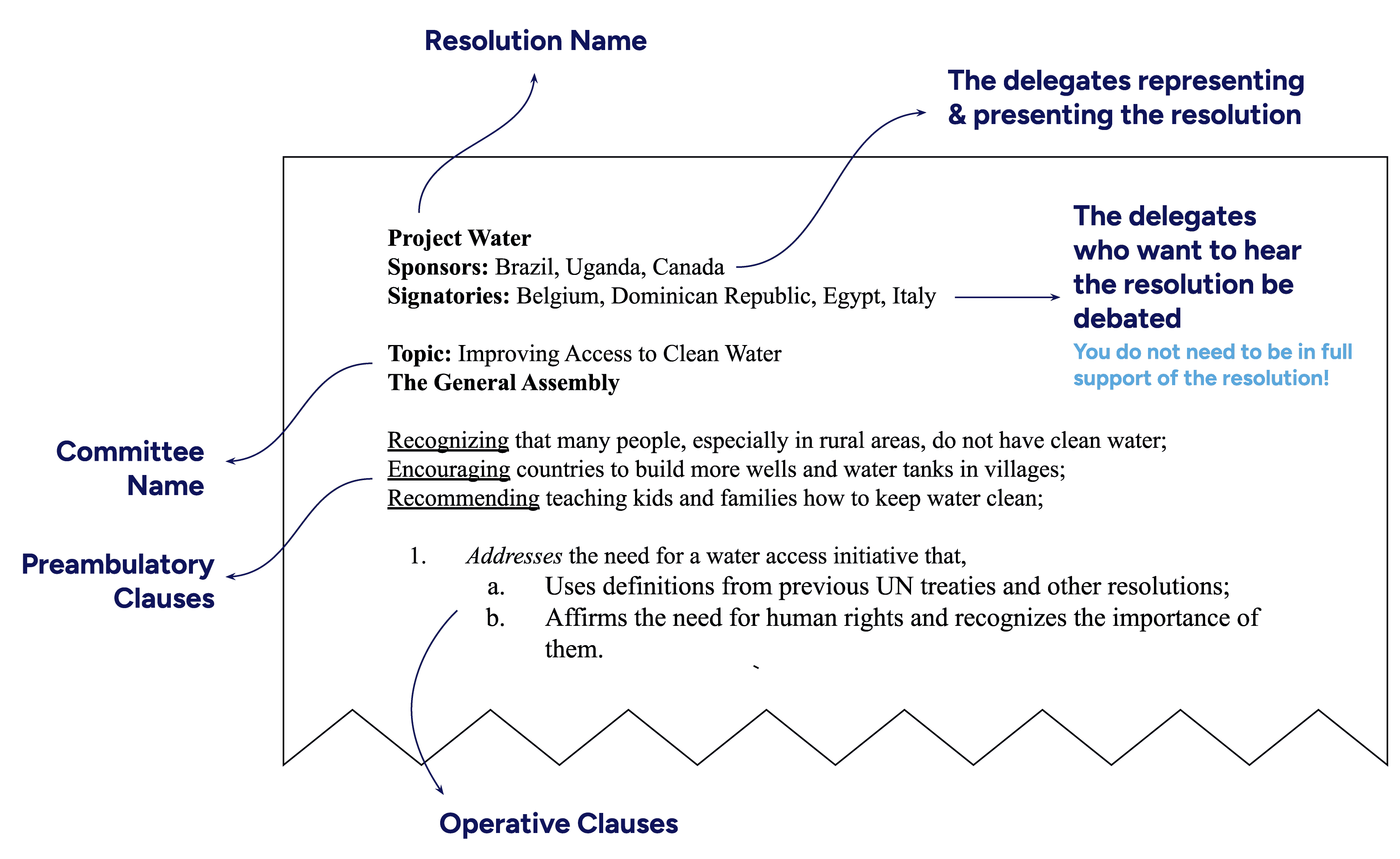
Resolution Papers should be written according to the UDMUN specifications. However, it should be noted you will be graded on your presentation as opposed to your formatting. Still, try to follow the guidelines. A sample resolution paper is available here.
Basic Formatting
The font should be Times New Roman
The font size should be 12 point.
The entire paper should be double-spaced.
The entire paper should be justified.
The paper should have margins of 1 inch (top, bottom, left, and right).
Header
The header consists of four parts:
The resolution name: The name of the resolution is the first line on the paper. Try to come up with creative names for your resolution! Many resolution names utilize acronyms, puns, or other ways to add a little fun to the committee.
The sponsors: The sponsors are the delegates who are representing the paper. In addition, they will also be the ones presenting the papers during the debate. If you are a sponsor, you must be ready to defend your resolution. Only be a sponsor if you think your country would support such legislation.
The signatories: The signatories are delegates who want to hear the resolution debated. You do not need to support the paper to be a signatory! By being a signatory, you are signaling to the bloc that you want to listen to their ideas.
The committee name: List the committee name in the "Topic:" line. Below the topic line, address it to "The General Assembly."
Preambulatory Clauses
Preambulatory clauses are lines that introduce the audience to the discussion at hand. This is a space for you and your bloc to highlight issues, solutions, and other events in your paper.
To format a preambulatory clause, simply begin with an underlined present participle and address an idea within the line.
Example present participles include: Recognizing, Acknowledging, Recalling, Observing, Concerned, Noting, Affirming, Realizing, Understanding, Deeply conscious, Alarmed, Bearing in mind, Confident, Convinced, Declaring, Deeply disturbed, Emphasizing, Fully aware, Gravely concerned, and Welcoming.
Operative Clauses
Operative clauses are the actual crux of your resolution paper. These clauses detail the steps and actions your solution will take. In debate, these statements will be scrutinized. It is important that your solution remains realistic while open to suggestions from other delegates.
An operative clause can be broken down into three key parts:
The main goal.
Steps to achieve that goal (optional)
Additional steps for said steps (optional)
To format an operative clause, simply create a numbered list. Use an italicized third-person singular present tense verb and write your main goal. Then, tab a new line and explain how you will achieve that goal. If necessary, add additional indentations for more explanations.
Example third-person singular present tense verbs include: Encourages, Recommends, Supports, Requests, Proposes, Urges, Calls upon, Approves, Suggests, Endorses, Invites, Mandates, Declares, Authorizes, Adopts, Instructs, Designates, Emphasizes, Establishes, and Stresses.
Process: From Drafting to Voting
Drafting
During unmoderated discussions, you will have the opportunity to draft your resolution papers with your bloc. At the chair's discretion, you will work on resolution papers until the time to submit them to a dedicated email address (available on the day of the conference).
Introduction
Call for a "Motion to introduce resolution paper [number/name of paper]" to the committee. Once the motion passes, delegates are given a short amount of time to review the paper individually.
The committee then goes into a 2 minute unmoderated caucus. The paper's sponsors are expected to meet and discuss who will be speaking during the Q&A session. Meanwhile, delegates from other blocs discuss possible questions to ask the sponsors. After the unmod, the committee delves into a 5 minute Q&A session. Formal debate rules apply.
Once the Q&A session is complete, the paper has finally been introduced into the committee.
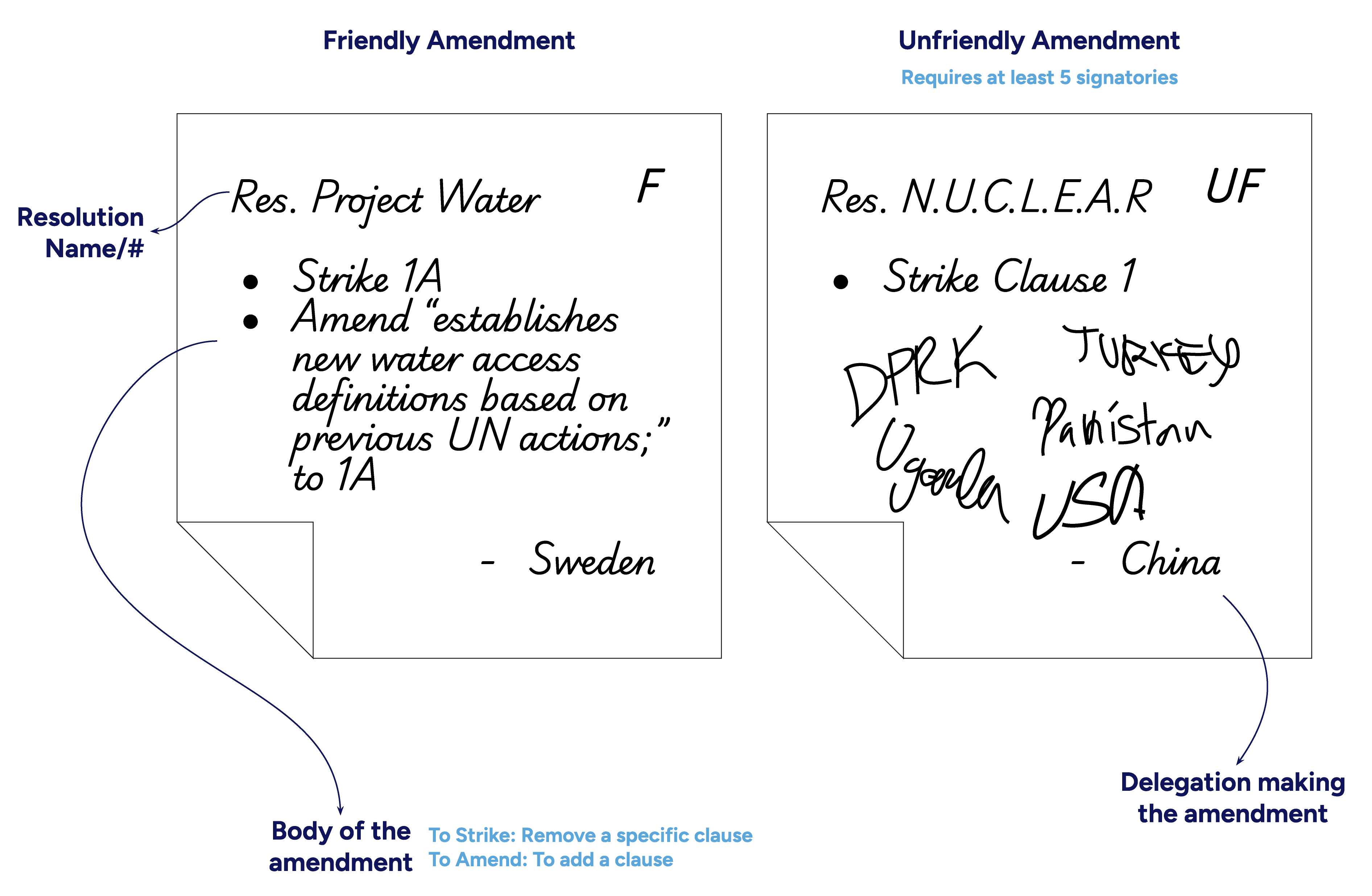
Amendments
Voting Procedure
Voting procedure can only proceed if all resolutions have been introduced and gone through the necessary amendments process.
To begin voting procedure, a delegate should "Motion to begin voting procedure." The chairs will begin roll-call voting, in which each delegation's name is said out-loud in alphabetical order. Delegates are expected to vote either yes, no, or abstain all together.
If there are more noes then yeses, then the paper fails to pass. If there are more yeses than noes, then the paper passes!
If a delegate is present and voting, they are unable to abstain and must vote either yes or no.
Copyright ©
2026
Upper Darby Model United Nations
UPPER DARBY MODEL UNITED NATIONS CONFERENCE